





Why Are Ball Bearings Still the Most Versatile Choice in Modern Machinery?
2025-12-08 11:42
When engineers compare different bearings—such as Insert Ball Bearings, Thrust Roller Bearings, Crossed Roller Bearings, or Wheel Bearings—they often realize that Ball Bearings remain one of the most universal and widely used solutions. But why do ball bearings continue to dominate so many industries? And what makes them different from the bearings we explored in previous blogs? Let’s break the topic down in a simple, practical way so any reader, even without an engineering background, can understand.
1. What Makes Ball Bearings Different?
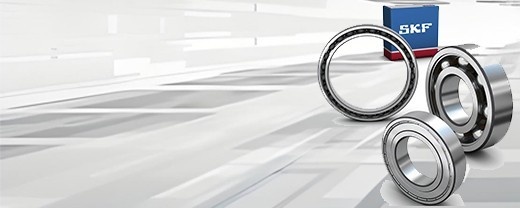
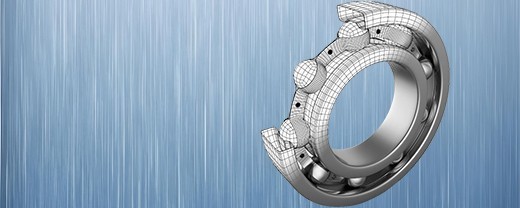
Ball Bearings rely on rolling balls placed between inner and outer rings, creating extremely low friction. Compared with Thrust Roller Bearings (designed for heavy axial loads) or Crossed Roller Bearings (designed for high precision and rigidity), Ball Bearings serve a wider range of general-purpose applications.
They support both radial and small axial loads, which is why they appear everywhere—from electric motors to home appliances. Honestly, they show up in so many devices that you probably used one today without noticing.
One common mistake are thinking ball bearings can handle very heavy shock loads, but specialized bearings like spherical roller bearings work better for that scenario.
2. Why Are Ball Bearings Used in So Many Industries?
Because they strike the perfect balance between price, performance, durability, and processing tolerance. As we discussed in our previous blogs:
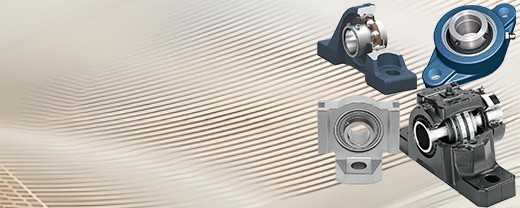
Insert Ball Bearings are preferred for mounted units in agriculture and conveyors.
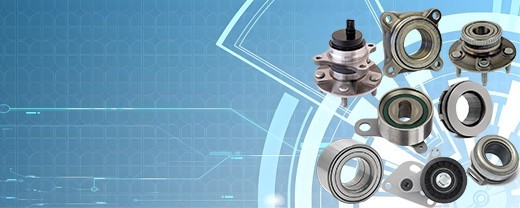
Wheel Bearings must handle high-speed rotation and road vibration.
Thrust Roller Bearings specialize in high axial loads.
Crossed Roller Bearings offer ultra-high precision for automation and robotics.
Ball Bearings, however, provide good enough performance for most mainstream machinery without requiring specialized features.
This versatility explains why manufacturers worldwide rely heavily on them.
3. Key Advantages of Ball Bearings (Easy to Understand)
✔ Lower Friction
The rolling balls greatly reduce heat and wear, supporting smooth operation.
This also improves energy efficiency, which matters a lot for motors and electric equipment.
✔ High-Speed Capability
Compared with roller bearings, ball bearings can reach higher RPMs, making them ideal for:
fans
blowers
pumps
small electric motors
You know, basically anything that spins fast.
✔ Lower Cost & Easier Replacement
Ball bearings are mass-produced globally. This creates stable supply, predictable quality, and lower cost.
Even non-professional users can replace them in many devices.
✔ Multi-Application Flexibility
They work in everything from household items to industrial equipment:
Automotive auxiliaries
Home appliances
Power tools
Conveyor systems
Fitness equipment
Machinery accessories
That’s why they are often the starting point when engineers choose bearing types.
4. How Ball Bearings Form a Matrix with Other Bearings
To help customers make smart choices, our content matrix compares related products:
Compared with Wheel Bearings, Ball Bearings are simpler and cheaper.
Compared with Crossed Roller Bearings, Ball Bearings offer less precision but more flexibility.
Compared with Insert Ball Bearings, Ball Bearings are used inside machines rather than in mounted housings.
Compared with Thrust Roller Bearings, Ball Bearings handle mixed loads better.
This interconnected knowledge helps customers make the correct selection for real-world applications.
5. When Should You Not Choose Ball Bearings?
Even with their advantages, ball bearings are not suitable for every scenario:
heavy axial loads → choose Thrust Roller Bearings
precision robotics → choose Crossed Roller Bearings
harsh contamination environments → choose Insert Ball Bearings with seals
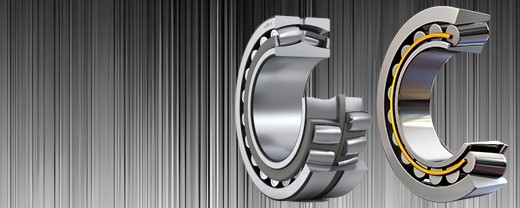
high shock loads → choose Spherical Roller Bearings
Knowing these limitations helps customers avoid failures and downtime.
6. Final Thoughts: Why Ball Bearings Remain the Standard Choice
Ball Bearings remain popular not because they are the “best” in all categories, but because they provide the most balanced performance across cost, speed, versatility, and ease of use. For companies seeking reliable and cost-effective components, ball bearings are simply the smart choice.
And as global demand grows—especially under the shift toward efficiency and electrification—ball bearings will continue to be a core component in countless machines.
Related News
More >-
Ceramic Bearings in Electric Motors: Are They Worth It?
-
Ball Bearings vs Roller Bearings: Which Is Better for Electric Motors?
-
When Should You Use Roller Bearings Instead of Ball Bearings in Heavy Machinery
-
How Do You Choose Between Ball Bearings and Roller Bearings for Different Applications?
-
How to Select the Right Bearing for Different Industrial Applications?
-
How Do Ball Bearings Improve Energy Efficiency in Modern Machinery?
-
Why Do Ball Bearings Make Machines Last Longer?
-
Where Are Ball Bearings Used in Daily Life?
Get the latest price? We'll respond as soon as possible(within 12 hours)