





How Do You Choose Between Ball Bearings and Roller Bearings for Different Applications?
2025-12-15 11:36
When engineers, buyers, or maintenance teams search for bearings online, one of the most common questions they ask is not about theory, but about real-world selection. After understanding the basic differences between ball bearings and roller bearings, the next logical step is figuring out which one actually fits your application. That’s exactly what this article focuses on.
This guide is written in a clear, practical way, so even readers without a deep engineering background can follow along. Meanwhile, it still covers the key technical points that professionals care about, making it useful for sourcing, design, and procurement decisions.
Understanding the Core Working Principle (Quick Recap)
Before choosing, let’s briefly reconnect with the basics.
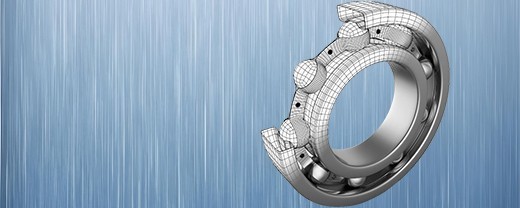
Ball bearings use spherical balls to reduce friction between moving parts. Because the contact area between the ball and raceway is small, friction is low, which makes ball bearings ideal for high-speed and low-to-moderate load applications.
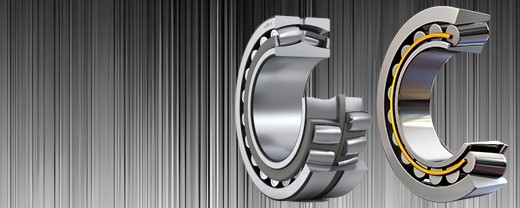
Roller bearings, on the other hand, use cylindrical, tapered, spherical, or needle-shaped rollers. These create a larger contact area, allowing them to handle heavier loads, especially radial loads.
So far so good. But in practice, selection is rarely that simple. And this is where things get interesting.
Load Type: Radial, Axial, or Combined?
One of the first questions customers usually ask is: what kind of load does my machine generate?
Ball bearings work well when loads are lighter and more evenly distributed. Deep groove ball bearings, for example, can handle both radial and limited axial loads, which makes them very popular across many industries.
Roller bearings are the go-to solution for heavy radial loads. Cylindrical roller bearings and spherical roller bearings are widely used in mining, steel mills, and construction machinery.
If your equipment experiences strong axial loads, tapered roller bearings or thrust roller bearings may be a better option. Choosing the wrong type here can shorten bearing life fast, and nobody wants that.
Speed Requirements: How Fast Is “Fast”?
Speed is another major deciding factor, especially for motors and precision equipment.
Ball bearings generally perform better at high speeds because rolling resistance is lower. This is why motor bearings, machine tool bearings, and gearbox bearings often rely on ball bearing designs.
Roller bearings, due to higher friction, usually run at lower speeds. That said, they compensate by offering superior load capacity. In some applications, speed matters less than strength, and that’s totally fine.
In real projects, engineers often say, “If speed is king, ball bearings win.” Sounds simple, but it’s true.
Alignment and Installation Tolerance
Let’s talk about something many buyers overlook: misalignment.
Some machines are not perfectly aligned during operation. This can happen due to shaft deflection, mounting errors, or structural deformation.
Self-aligning ball bearings and spherical roller bearings are designed to tolerate misalignment.
Standard deep groove ball bearings and cylindrical roller bearings require more precise installation.
If alignment is difficult to control, selecting the right bearing design can save you a lot of trouble later. A wrong choice here is one of the most common reason bearings fail earlier than expected.
Application Scenarios: Where Each Type Makes Sense
To make things clearer, let’s look at common applications customers often search for:
Ball bearings: electric motors, household appliances, fans, pumps, textile machinery, motorcycles, agricultural equipment.
Roller bearings: rolling mills, excavators, tractors, gear reducers, heavy conveyors, wind turbines.
In many modern machines, both types are used together. For example, a gearbox may use ball bearings for high-speed shafts and roller bearings for load-heavy sections. That combination works really well in practice.
Cost, Availability, and Maintenance Considerations
From a purchasing perspective, cost and availability matter just as much as performance.
Ball bearings are usually more economical and widely available. Roller bearings may cost more upfront, but they often last longer in heavy-duty environments. Over time, that can mean lower total cost of ownership.
Maintenance-wise, neither type is “maintenance-free,” but proper lubrication and correct selection make a huge difference. If a bearing is chosen correctly, it can run for years without issues, which is what most customers really want.
One thing to note: sometimes buyers focus too much on price, and the bearing selection are wrong from the beginning.
Choosing the Right Supplier Matters Too
Even the best bearing design won’t perform well if manufacturing quality is inconsistent. That’s why many global buyers look for experienced China bearing manufacturers and suppliers that offer stable quality, clear specifications, and application support.
A reliable supplier doesn’t just sell bearings; they help customers choose the right bearing for the job. And honestly, that support is often more valuable than a small price difference.
Final Thoughts: Selection Is About Balance
Choosing between ball bearings and roller bearings is not about which one is “better.” It’s about matching the bearing to the application. Load, speed, alignment, environment, and budget all play a role.
Related News
More >-
Ceramic Bearings in Electric Motors: Are They Worth It?
-
Ball Bearings vs Roller Bearings: Which Is Better for Electric Motors?
-
When Should You Use Roller Bearings Instead of Ball Bearings in Heavy Machinery
-
Why Are Ball Bearings Still the Most Versatile Choice in Modern Machinery?
-
How to Select the Right Bearing for Different Industrial Applications?
-
How Do Ball Bearings Improve Energy Efficiency in Modern Machinery?
-
Why Do Ball Bearings Make Machines Last Longer?
-
Where Are Ball Bearings Used in Daily Life?
Get the latest price? We'll respond as soon as possible(within 12 hours)