





Ball Bearings vs Roller Bearings: Which Is Better for Electric Motors?
2025-12-22 16:20
Electric motors are everywhere — from industrial production lines and pumps to household appliances and electric vehicles. One key component that directly affects motor performance, efficiency, and service life is the bearing. A common question many buyers and engineers ask is: Should you use ball bearings or roller bearings for electric motors?
To answer this properly, we need to look at how electric motors work, what loads they generate, and how different bearing designs respond to those conditions.
1. Understanding the Operating Conditions of Electric Motors
Electric motors are typically characterized by:
High rotational speed
Continuous operation
Relatively stable loads
Sensitivity to friction, noise, and heat
Unlike heavy machinery such as crushers or rolling mills, motors usually do not experience extreme shock loads. This operating profile already gives us a strong hint about which bearing type performs better.
As we discussed in earlier articles, selecting the right bearing always starts with understanding the application, not just the load rating.
2. Why Ball Bearings Are Commonly Used in Electric Motors
Ball bearings are widely used in electric motors for several important reasons.
Low Friction and High Speed Capability
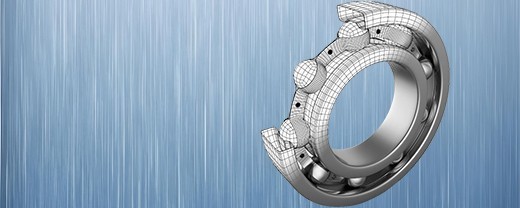
Ball bearings generate rolling contact with minimal friction, making them ideal for high-speed rotation. This directly improves motor efficiency and reduces energy loss.
That’s why deep groove ball bearings and angular contact ball bearings are commonly found in motor shafts, fans, and blowers.
Lower Heat Generation
Electric motors are sensitive to heat. Excessive heat can degrade insulation and shorten motor life. Ball bearings help keep operating temperatures lower, which is critical for long-term reliability.
Sometimes the motor performance depend on how stable the bearing temperature remains during continuous operation.
Quieter Operation
Noise control matters, especially in household appliances, HVAC systems, and precision equipment. Ball bearings typically produce less vibration and noise compared to roller bearings.
To be honest, if you’ve ever heard a noisy motor, the bearing choice was probably not ideal.
3. Where Roller Bearings May Be Used in Motors
Although ball bearings dominate motor applications, roller bearings still have their place in specific scenarios.
Higher Load Capacity
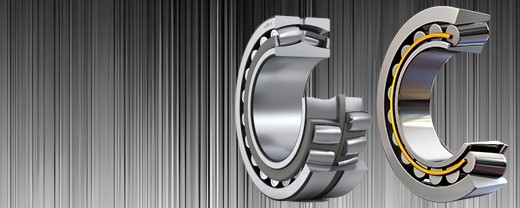
Roller bearings, such as cylindrical roller bearings, can handle higher radial loads than ball bearings of the same size. In large industrial motors or generators with heavy rotors, roller bearings may be used on one side of the shaft.
Improved Shaft Support
In some designs, roller bearings are combined with ball bearings — rollers handle radial loads, while ball bearings control axial positioning.
This hybrid setup appears in large motors where stability is more important than compact size.
4. Ball Bearings vs Roller Bearings: Key Differences for Motors
| Aspect | Ball Bearings | Roller Bearings |
|---|---|---|
| Speed capability | Excellent | Moderate |
| Friction | Low | Higher |
| Heat generation | Low | Higher |
| Noise level | Low | Higher |
| Load capacity | Medium | High |
| Typical motor use | Small to medium motors | Large industrial motors |
As you can see, ball bearings align more closely with the core needs of electric motors.
5. How This Connects to Our Previous Articles
This article builds directly on our earlier discussions:
High-speed machinery: Ball bearings perform better at high RPM
Energy efficiency: Lower friction means lower power loss
Bearing selection: Application-driven choice is essential
Roller bearings in heavy machinery: Better for load, not speed
By comparing motor requirements with bearing characteristics, the selection becomes much clearer.
6. Which One Should You Choose?
For most electric motors, ball bearings are the better choice due to their high-speed capability, low friction, and quiet operation. Roller bearings should only be considered when:
The motor is very large
Radial loads are unusually high
Shaft rigidity is a primary concern
In general, choosing a high-quality ball bearing from a reliable manufacturer will give you the best balance of performance, efficiency, and service life.
Ball bearings and roller bearings each serve important roles, but when it comes to electric motors, ball bearings usually come out on top. Their ability to operate smoothly at high speed with low heat and noise makes them the preferred solution for most motor applications.
Understanding these differences helps buyers avoid overdesign, reduce costs, and improve equipment reliability — exactly what modern motor systems demand.
Related News
More >-
Ceramic Bearings in Electric Motors: Are They Worth It?
-
When Should You Use Roller Bearings Instead of Ball Bearings in Heavy Machinery
-
How Do You Choose Between Ball Bearings and Roller Bearings for Different Applications?
-
Why Are Ball Bearings Still the Most Versatile Choice in Modern Machinery?
-
How to Select the Right Bearing for Different Industrial Applications?
-
How Do Ball Bearings Improve Energy Efficiency in Modern Machinery?
-
Why Do Ball Bearings Make Machines Last Longer?
-
Where Are Ball Bearings Used in Daily Life?
Get the latest price? We'll respond as soon as possible(within 12 hours)