





What Are the Differences Between Ball Bearings and Roller Bearings?
2025-12-08 11:46
For many buyers and engineers, choosing between Ball Bearings and Roller Bearings can feel confusing, especially when different equipment seems to require different bearing structures. Both types belong to the same family of rolling bearings, yet they behave differently under load, speed, and application conditions. So, what exactly sets them apart? And how do you decide which one is right for your machinery?
Let’s break it down clearly and practically.
1. Basic Structural Difference: Balls vs. Rollers
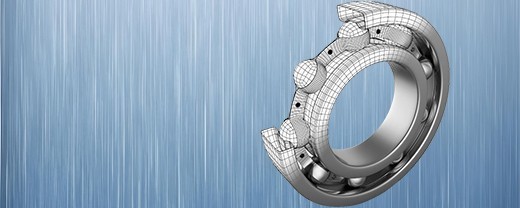
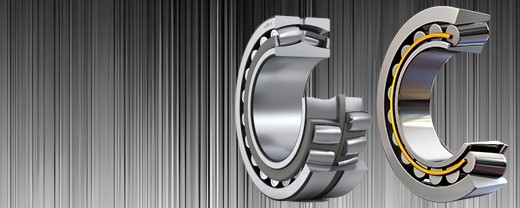
Ball Bearings use spherical balls as rolling elements, while Roller Bearings use cylindrical, tapered, or needle-shaped rollers.
This may sound like a small difference, but it completely changes how each bearing handles loads.
Ball Bearings reduce friction exceptionally well and support both radial and light axial loads.
Roller Bearings have more contact surface, allowing them to carry heavier radial loads.
This simple structural contrast is the foundation of everything we discuss next.
2. Load Capacity: Roller Bearings Handle More Weight
Because their rollers have a larger contact area, Roller Bearings are better for heavy-duty machinery.
Examples include:
construction equipment
mining machinery
conveyor pulleys
industrial gearboxes
Ball Bearings, as we mentioned in previous articles, are ideal for general-purpose applications like motors, pumps, blowers, household appliances, and automotive components.
Sometimes customers assume ball bearings can replace any roller bearing, but this is not correct when heavy loads are involved.
3. Speed Capability: Ball Bearings Win Here
If your machine needs high rotational speed, Ball Bearings are usually the better choice. Their point contact allows smoother rolling and less heat generation.
That’s why you often see them in:
fans and blowers
electric motors
small machinery
automation equipment
On the other hand, Roller Bearings—especially tapered or needle types—tend to operate at lower speeds due to higher friction.
A quick note: in some high-speed environments, using roller bearings would literally wear things out too fast.
4. Application Differences: Choosing Based on Machinery Needs
Ball Bearings
Best for:
high speed
low to medium loads
mixed radial and axial loads
compact design requirements
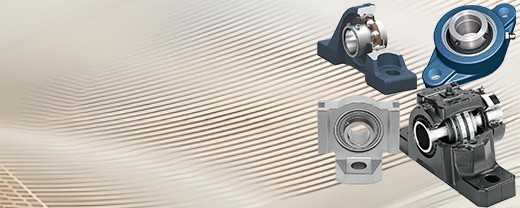
Related products we discussed earlier—such as Insert Ball Bearings—are used in mounted units for agriculture, conveyors, and light machinery.
Roller Bearings
Best for:
heavy radial loads
shock loads
industrial-grade machinery
precision applications like CNC (Crossed Roller Bearings)
Roller bearings also include special types like Thrust Roller Bearings, which handle extreme axial forces better than ball bearings can.
5. Misconceptions Buyers Often Have
Here are common misunderstandings we frequently hear:
Misunderstanding 1:
“All bearings are interchangeable.”
Not true. Using a ball bearing where a roller bearing is required can shorten service life dramatically.
Misunderstanding 2:
“Roller bearings always last longer.”
Only when used in the correct load range.
If installed in high-speed applications, roller bearings may wear faster.
Misunderstanding 3:
“Ball bearings are too simple for industrial use.”
Actually, ball bearings power thousands of industrial systems because they offer the most balanced performance.
And yeah, sometimes buyers pick roller bearings simply because they look more heavy-duty.
6. How Ball Bearings and Roller Bearings Fit Into Our Content Matrix
This article connects directly with earlier blogs:
In our Ball Bearings overview, we emphasized high-speed performance.
In our Thrust Roller Bearing article, we highlighted axial load advantages.
In our Crossed Roller Bearing article, we explained precision applications.
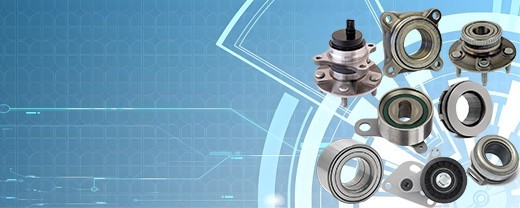
In our Wheel Bearing article, we discussed real-world automotive load requirements.
In our Insert Ball Bearing article, we covered mounted-unit use cases.
Together, these topics form a complete understanding for buyers who need a structured comparison.
7. Final Summary: Which One Should You Choose?
Here’s the simplest way to remember:
| Feature | Ball Bearings | Roller Bearings |
|---|---|---|
| Rolling Element | Balls | Rollers |
| Speed | Higher | Lower |
| Load Capacity | Medium | High |
| Axial Load Handling | Moderate | Depends on type |
| Cost | Generally lower | Higher |
| Best For | Motors, fans, appliances | Heavy machinery, industrial equipment |
So, the right choice is not about which is “better” but which suits your working conditions.
Related News
More >-
What Causes Ball Bearing Failure and How to Prevent It?
-
Why Do Ball Bearings Play a Critical Role in High-Speed Machinery?
-
Why Ball Bearings Are the Backbone of Modern Machinery
-
Insert Ball Bearing vs Pillow Block Bearing: What's the Difference?
-
What Is a Wheel Bearing and Why Does It Matter for Vehicle Safety?
-
How Do Motor Bearings Keep Your Machines Running Smoothly?
-
How Do Gearbox Bearings Improve Efficiency and Reliability in Machinery?
-
How Do Wheel Bearings Keep Your Vehicles Running Smoothly?
Get the latest price? We'll respond as soon as possible(within 12 hours)